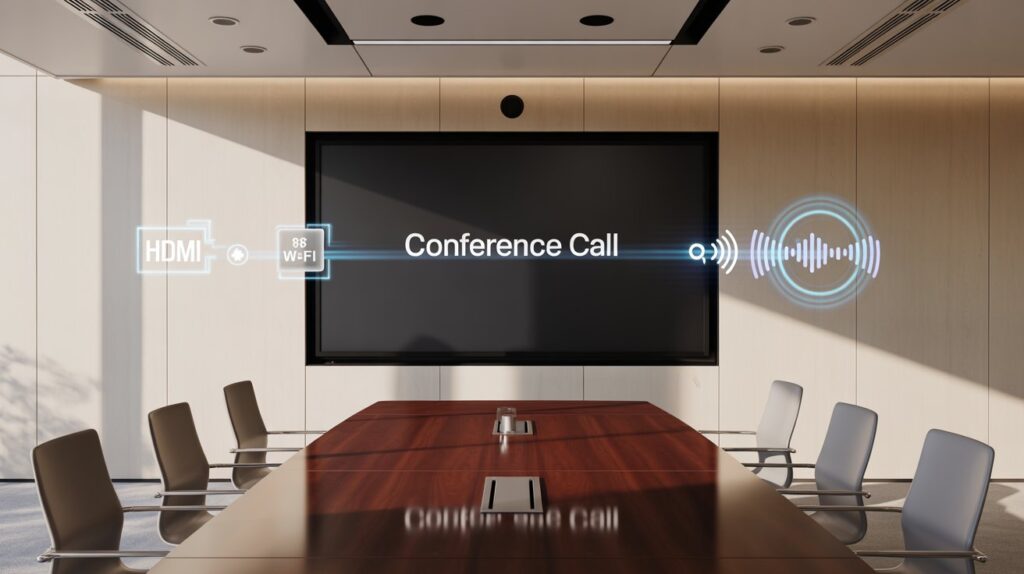
AV integration has become critical for smooth communication, effective collaboration, and professional presentation in technology-driven workplaces.
However, for many decision-makers, the world of AV can seem filled with jargon and complex terms. Understanding these basics can empower you to make informed choices when planning or upgrading your organization’s AV infrastructure.
In this article, we’ll break down the most essential AV terms and concepts every business leader, facility manager, or IT head should know.
AV Integration
AV integration refers to the process of combining various audio-visual components such as displays, speakers, microphones, control systems, and networking gear into one seamless, functional system. A well-integrated AV system ensures all devices communicate efficiently and work together to serve the space’s purpose.
Why it matters: Integration is what transforms individual devices into a unified system, maximizing usability, performance, and ROI.
- Signal Types: Analog vs Digital
- Analog Signals are continuous signals used in older AV systems. They are more susceptible to interference.
- Digital Signals are binary (1s and 0s) and provide better quality and reliability, especially for long cable runs.
Decision tip: For modern AV projects, digital signal transmission (e.g., HDMI, DisplayPort) is standard.
- HDMI, DisplayPort, and HDBaseT
- HDMI (High-Definition Multimedia Interface) is the most common digital connection for transmitting both video and audio through a single cable.
- DisplayPort is similar but often used in professional or IT settings due to higher bandwidth.
- HDBaseT allows for the transmission of HD video, audio, Ethernet, and power over long distances using a single Cat6 cable.
Key insight: HDBaseT is ideal for corporate boardrooms or education settings needing long cable runs.
- Audio DSP (Digital Signal Processor)
A Digital Signal Processor is used to manage, process, and optimize audio signals. It can eliminate echo, reduce noise, and ensure that everyone in a meeting hears clearly both in the room and remotely.
Pro tip: A quality DSP is crucial for any room with video conferencing capabilities.
- Matrix Switchers
A matrix switcher allows you to route multiple input sources (like laptops, cameras, or media players) to multiple output devices (such as displays or projectors). These are commonly used in command centers, training rooms, or multi-display setups.
Use case: Switch from a presentation feed to a video call with a tap without reconnecting cables.
- Control Systems (Crestron, Extron, AMX)
AV control systems simplify complex setups. Using touch panels or wall-mounted controls, users can adjust lighting, control displays, manage audio levels, and switch sources often with one interface.
Popular brands: Crestron, Extron, and AMX dominate the commercial AV control system market.
Why it matters: A user-friendly control system reduces reliance on IT and improves productivity.
- Video Conferencing Platforms (VC)
Platforms like Zoom, Microsoft Teams, Cisco Webex, and Google Meet require AV systems that support camera integration, echo cancellation, and speaker tracking to ensure a seamless virtual collaboration experience.
Pro tip: Choose AV gear that’s certified for your primary VC platform.
- Latency
Latency refers to the delay between a signal being sent and received. High latency can cause audio to be out of sync with video, which is disruptive in live presentations or virtual meetings.
Tip: Invest in low-latency AV components, especially in live-streaming or real-time communication environments.
- Unified Communications (UC)
Unified Communications combines multiple communication tools voice, video, messaging, file sharing into a single platform. AV systems that support UC help teams collaborate across locations and time zones.
Strategic insight: AV systems should be future-ready and integrate with your UC platform of choice.
- Acoustic Treatment
Often overlooked, acoustic panels, ceiling tiles, and diffusers are used to control sound reflections and reduce noise in meeting rooms or auditoriums. Good audio starts with good room acoustics.
Decision tip: Even the best AV equipment can’t fix poor room acoustics. Plan for both tech and space.
Conclusion: Speak the Language of AV
Whether you’re planning a boardroom upgrade, launching a hybrid workspace, or building a new training facility, speaking the basic language of AV will help you make smarter, cost-effective, and future-proof decisions.
Understanding terms like HDBaseT, DSP, control systems, and unified communications allows you to collaborate better with AV integrators, ask the right questions, and ensure your investment delivers long-term value.